

The startup dream vs. reality
One thing I’ve learned after working on digital marketing with so many startups: most founders know they need it, but few truly understand what it is or how it fuels growth.
I’ve worked with founders who poured their heart into their brand, and with a few who launched an idea and expected sales to roll in on their own. The difference? The ones who stayed committed are still out there, selling and growing. The others gave up.
Marketing rewards the people who stay, not the ones who expect it to work by Friday.
So let’s break it down: why digital marketing is non-negotiable for startups, and how to use it to grow instead of just survive.
Is marketing the reason startups fail?
Not by itself. But a lack of strategic marketing? That’s a deal-breaker.
Let me paint a picture. Imagine you’ve made the most delicious pizza on the planet. The crust is crispy, the sauce is perfection, and the cheese melts like a dream. But you set up your pizzeria in the middle of a forest with no signs, no social media, and no delivery. Guess what? Nobody’s going to show up, no matter how tasty your pizza is.
That’s what happens when startups skip marketing. They’re selling an amazing product, but no one knows it exists.
Of course, marketing isn’t the only reason startups fail. Usually, several things go wrong at once.
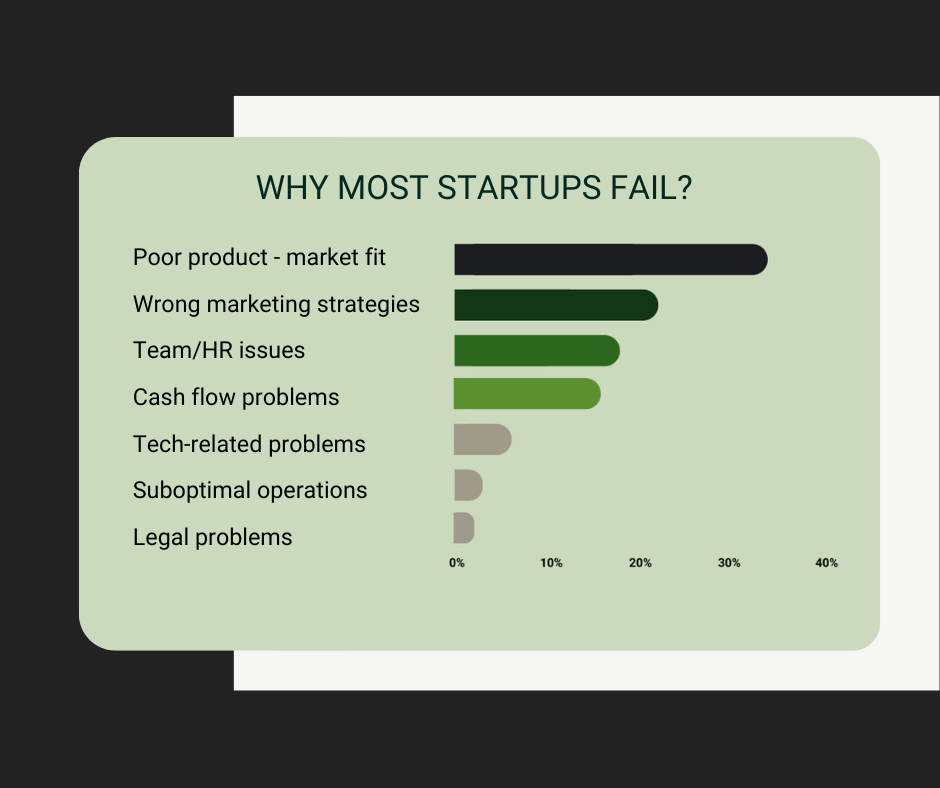
According to Failory’s interviews with founders of failed startups (via Exploding Topics):
- 34% failed because of poor product-market fit. (They solved a problem nobody actually had.)
- 22% failed because of the wrong marketing strategy. (They tried to talk to everyone and reached no one.)
- 18% failed because of team problems. (Teamwork makes the dream work, folks.)
Even a killer marketing strategy can’t save a product nobody wants. That’s why market research is non-negotiable.
The research shortcut most startups skip (and regret later)
A lot of founders skip research because they want results yesterday. They rush into websites, ads, and social media, hoping something sticks. Without research, you’re blindfolded, throwing darts at a wall, and hoping for a bullseye.
The most successful startups obsess over research. They study competitors, dig into customer pain points, and base their decisions on data, not guesswork.
Research helps you:
- Define your ideal customer. (What do they love? What frustrates them? What words do they use?)
- Find your brand voice. (Are you playful, serious, quirky, or bold?)
- Create content that resonates. (Value people actually care about, instead of generic posts.)
Let’s play a game: A or B?

Imagine you’re scrolling through Instagram, and an ad pops up for a product you’ve wanted forever. (Ads can be a little psychic, right?) It looks amazing, but it’s pricey, and you’ve never heard of the brand. What do you do?
A) Buy it right away.
B) Check their social media, browse the website, read the reviews, and dig into their online presence.
If you picked B, you’re like most people, especially for higher-priced items.
Now flip it. Think about the product you want to launch. What would your customers need to see to feel confident buying from you? Why would they choose you over a competitor? And if someone offers it cheaper, what makes yours worth more?
That’s your first golden rule: understand your audience before you try to sell to them.
If you sell snacks or $10 accessories, people won’t investigate much. But the higher the price, the more proof they want that your brand is legit.
What digital marketing does for your startup
Launching a startup is exciting, but even the most brilliant product can get lost in a crowded market without the right visibility. Here’s what digital marketing does for you.
1. It puts your brand on the map
People can’t buy from a brand they don’t know exists. Social media, search, and content get you discovered, and keep the conversation going after the first click.
2. It levels the playing field
Traditional advertising favors big budgets. With SEO, content, and social media, a startup can build an audience and compete without spending a fortune.
3. It builds trust and credibility
Remember option B? Your online presence is exactly what customers check before they buy. It tells them you’re real, reliable, and worth their money.
4. It drives long-term growth, without burning your budget
Quick sales from ads feel good, but they stop when the budget does. Consistent content and an engaged community keep working for you over time, even while you sleep.
How to build your startup marketing strategy, step by step

Digital marketing is a powerful growth engine, but without a strategy, it’s like planting seeds without soil.
Step 1: Understand your audience. The better you know them, the easier it is to attract them.
Step 2: Craft your brand story. People connect with stories, not sales pitches.
Step 3: Build a website and get found. If it’s slow, confusing, or hard to find, you’re losing customers.
Step 4: Create high-value content. Blogs, videos, guides: whatever format your audience prefers.
Step 5: Show up on social media, with purpose. Consistency beats volume. Even a small, engaged following can snowball.
Step 6: Build an email list. It’s the one channel you own, with no algorithm in between.
Step 7: Collaborate. Team up with creators or complementary brands to reach new audiences.
Step 8: Track, learn, and adapt. Keep what works, drop what doesn’t, and refine as you go.
Bottom line: digital marketing is non-negotiable
No matter how innovative your startup is, it can’t succeed if no one knows it exists. Digital marketing bridges the gap between your idea and the people who need it. Don’t treat it as an afterthought. Build it in from day one.
Curious about the thinking behind it? Read about the DGreenovation concept.
02.
Want to go one step further?
The five marketing mistakes that sink most startups, and how to avoid them, are in my free guide, AI for speed. Humans for strategy.